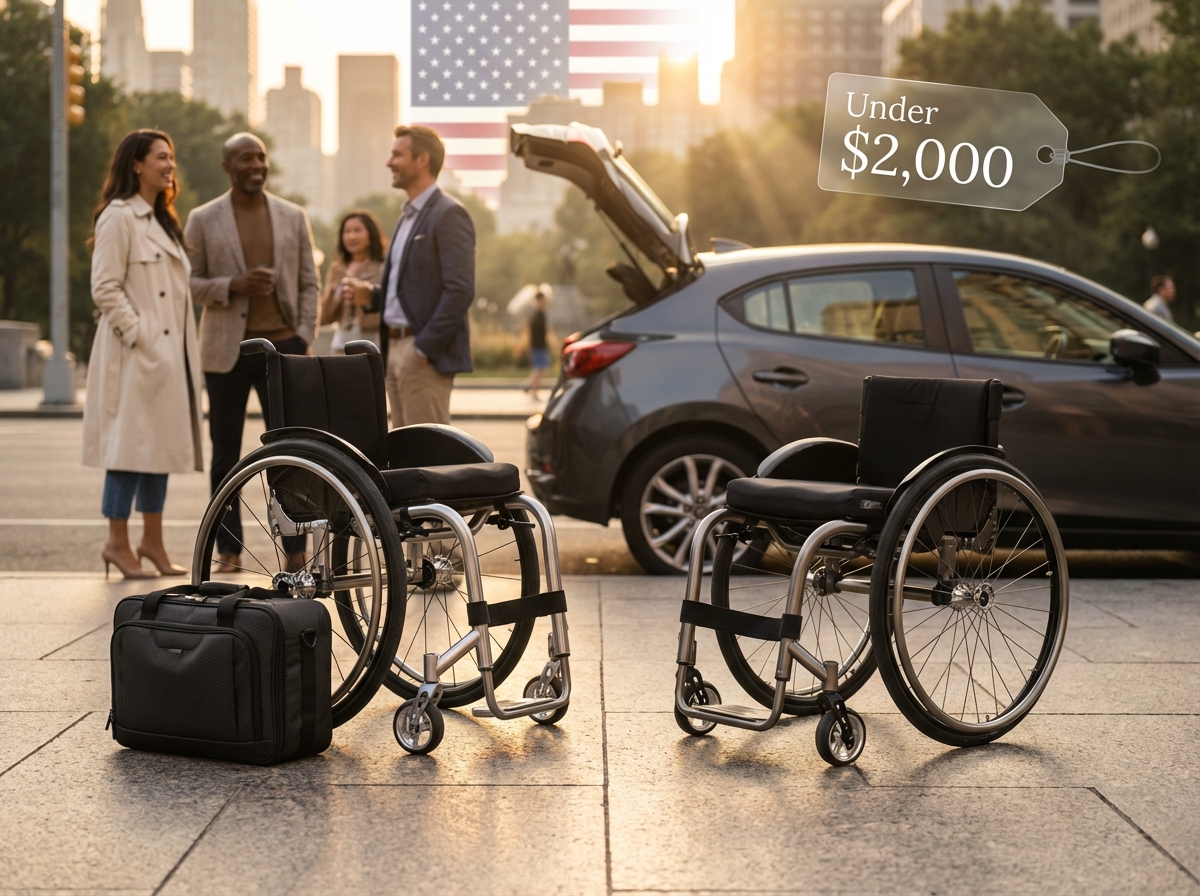
Finding a true ultralight wheelchair under $2,000 means balancing frame materials, transport weight, and everyday performance. This article walks readers through why ultralight matters, current budget options, how to compare spec sheets and fit, funding and transport tips, plus common questions to help you choose a dependable lightweight chair without overspending.
Why ultralight wheelchairs matter for everyday independence
The weight of a manual wheelchair determines how much energy you spend just moving through your day. For anyone on a budget, finding a chair under $2,000 that actually qualifies as ultralight is a major win for personal freedom. Weight is not just a number on a spec sheet; it represents the physical cost of every push and every lift.
Transport weight is the most important number to watch. This is the weight of the frame after you remove the wheels and footrests. It is what a caregiver lifts into a car trunk, or what a user pulls across their body into the passenger seat. Total system weight includes everything. A chair might weigh 30 pounds total but have a transport weight of only 16 pounds. This distinction matters because a lighter transport weight reduces the physical strain on shoulders and backs.
When a chair stays under the 30-pound mark for transport weight, daily routines shift. You might go to the park more often or stop worrying about whether a friend can help you load the chair. Studies suggest that reducing lift effort by even 40 percent can help prevent long-term rotator cuff injuries for both users and caregivers. This is especially true for active manual users who load their own equipment multiple times a day.
Materials have improved significantly in the budget category. Most chairs in this price range use 7000 series aluminum alloys. This material is strong and keeps the frame stiff. Some manufacturers use reinforced chromoly for higher weight capacities. While you won’t find many pure titanium frames under $2,000, the aluminum options now mimic that performance. Entry-level titanium blends are starting to appear in some components to save a few extra ounces.
There is a choice between folding and rigid frames. Folding chairs like the Quickie QS5 X are popular because they fit in small spaces and use new designs to make folding easier. Rigid frames are often lighter by a few pounds and feel more responsive because the frame does not flex when you push. Active users who self-propel often prefer rigid frames for efficiency.
Budget ultralights do come with some tradeoffs. You might get fewer color options, and the upholstery might be standard mesh instead of custom padding. Accessories like carbon fiber side guards might cost extra, potentially pushing you over the $2,000 limit. However, the core performance of the frame remains high. You are paying for the engineering of the frame rather than the luxury of the finish.
User profiles vary. Active manual users need efficiency, travel users need compact folding, and caregivers need something they can lift without pain. A chair like the Quickie QXi offers a balance of these needs for around $1,386. It provides adjustable axles which help with propulsion. This adjustability allows you to change the center of gravity, making the chair easier to turn and saving energy during long trips.
In late 2025, the market expects a weight capacity between 250 and 300 pounds for these models. Higher capacities usually require heavier frames. If you need a chair that supports 400 pounds, you might have to look at more expensive titanium models or accept a heavier aluminum frame. Most budget ultralights focus on the 250-pound range to keep the weight low.
| Weight Type | What is Included | Impact on User |
|---|---|---|
| Transport Weight | Frame only (no wheels/legrests) | Ease of car loading |
| System Weight | Full chair with all parts | Propulsion effort |
| User Weight | The person in the chair | Frame stress levels |
Propulsion efficiency is another core benefit. Ultralight chairs often feature high-quality bearings and pneumatic tires to lower rolling resistance. Solid tires are an option but are heavier and offer a rougher ride. Pneumatic tires provide better shock absorption, which is important for users who spend all day in their chairs.
The trend in 2025 is toward “FreeFold” technology. This design reduces the force needed to fold the chair by over 40 percent, a major benefit for people with limited hand strength. It makes the transition from the chair to the car much faster. You can find more options in the SpinLife ultralight selection which covers many of these new designs.
Realistic expectations are key. At a sub-$2,000 price point, you are getting a high-performance tool durable for five years or more of daily use. It will not have the extreme customization of a $5,000 chair. You might have to choose from a few seat widths instead of having one built to the millimeter. For most users, these standard sizes work perfectly. The weight savings are the real value here. You can see various models in the 1800Wheelchair lightweight category to compare these features.
Independence is the ultimate goal. A chair that is too heavy stays in the house; a chair that is light goes to the store, the theater, and on vacation. By focusing on transport weight and frame material, you can find a solution that fits your life without spending a fortune. Performance is now available without the premium price tag.
Top budget ultralight options and how to compare them
Finding a high-performance wheelchair on a budget requires looking at specific technical details. In late 2025, the market for ultralight chairs under $2,000 has expanded. Manufacturers now use advanced aluminum alloys and carbon fiber composites to keep weights low. These models offer a balance between ease of transport and long-term durability. The following options represent the best value for users in the USA today.
Quickie QS5 X Folding Ultralight
The Quickie QS5 X is a top contender for active users. It features a transport weight of 16.5 pounds and a total weight capacity of 300 pounds. This chair uses 7000 series aluminum, a material often found in aerospace applications that provides a very stiff frame. The FreeFold design is a major benefit, reducing the force needed to fold the chair by 40 percent. This saves energy for users who collapse their chair many times a day. The retail price is approximately $1,850. It comes with quick-release wheels and pneumatic tires that offer low rolling resistance on smooth surfaces. The maneuverability is excellent due to the rigid nature of the folding mechanism; it feels more like a rigid chair than a traditional folder. The average warranty covers the frame for three years. This model is best for active individuals who drive themselves and need to lift the frame across their body. You can find more details on the Quickie manufacturer page.
Quickie QXi Ultralight
The Quickie QXi is a versatile workhorse priced at $1,386, making it one of the most affordable truly ultralight options. The transport weight is roughly 18 pounds with a weight capacity of 265 pounds. The frame is made of high-grade aluminum and features swing-in and swing-out footrests, which are helpful for transfers in tight spaces. The axle is highly adjustable, allowing users to tweak the center of gravity to improve propulsion efficiency—a rarity at this price point. The rolling resistance is low when paired with high-pressure tires, handling well on indoor surfaces and paved paths. The warranty is a standard three years on the frame. It is best for users who need a custom fit but have a strict budget. Independent reviews on sites like SpinLife often highlight its durability over several years of use.
Matrix Ultra 2 Carbon Fiber
The Matrix Ultra 2 uses carbon fiber to achieve a distinct aesthetic and vibration dampening. It weighs 35 pounds in its full configuration, though the transport weight is lower when the wheels are removed. It supports up to 250 pounds. Carbon fiber absorbs vibrations better than aluminum, leading to a smoother ride on cracked sidewalks. The folding mechanism is simple and fits easily into most car trunks. The retail price stays under the $2,000 mark. It uses solid tires which eliminate the risk of flats, though they can feel stiffer on rough ground. The maneuverability is good in tight indoor spaces. The warranty typically covers the frame for one to two years. This chair is best for people who prioritize a smooth ride and modern look. It is a popular choice on 1800Wheelchair for travel purposes.
Karman KM-5000-TP Reclining Transport
The Karman KM-5000-TP is a specialized option weighing 33 pounds. It features a reclining backrest, which is important for users who need to change positions for pressure relief. The weight capacity is 250 pounds. It uses 14-inch rear mag wheels that are durable and require zero maintenance. The frame is made of high-strength aluminum. As a folding transport chair, it is designed to be pushed by a caregiver. The rolling resistance is slightly higher than chairs with larger wheels. It excels in clinical settings or for long outings where the user might need to rest. The price is very competitive at around $400. The warranty is usually one year. It is the best choice for caregivers who need a reclining feature without the weight of a standard hospital chair.
Medline Ultralight Foldable Transport Chair
The Medline MDS808200 is the most budget-friendly option, currently priced at approximately $152. The transport weight is about 25 pounds and it supports 250 pounds. The frame is a mix of aluminum and steel. It folds down very small and uses basic solid wheels, which are best for indoor use or short trips to a doctor’s office. The maneuverability is basic and does not offer the precision of the Quickie models. The warranty is one year. This chair is best as a secondary option for travel or for occasional use. It is widely available at Medicaleshop and other major retailers.
Majestic IQ-8000 Folding Power Chair
The Majestic IQ-8000 fits into the budget category for power mobility. It costs $1,599. The weight without the battery is 49 pounds—heavy for a manual chair but very light for a power chair. It supports 250 pounds. The frame is an aluminum alloy and is airline approved, making it a great travel companion. The memory foam seat provides good comfort for long periods. The turning radius is tight, working well in small apartments. The warranty covers the frame for two years. This is the best scenario for someone who needs power assistance but has a budget under $2,000.
Quickie 2 Lite
The Quickie 2 Lite is a lighter version of the world’s best-selling ultralight. It features a rounded rear frame to reduce the overall footprint. A unique feature is the free growth kit available within the first five years, which is excellent for younger users or those whose needs might change. The transport weight is approximately 19 pounds. The price sits around $1,325. It is highly customizable; you can choose different seat widths and depths. The maneuverability is top-tier, responding quickly to every push. The warranty is three years on the frame. It is best for long-term daily use where reliability is the main concern.
Comparison of Top Budget Ultralight Models
| Model Name | Typical Price | Transport Weight | Weight Capacity | Best Use Case |
|---|---|---|---|---|
| Quickie QS5 X | $1,850 | 16.5 lbs | 300 lbs | Best for active daily self-propulsion |
| Quickie QXi | $1,386 | 18 lbs | 265 lbs | Best value for custom adjustability |
| Matrix Ultra 2 | $1,800 | 35 lbs (total) | 250 lbs | Best for vibration dampening |
| Karman KM-5000 | $400 | 33 lbs | 250 lbs | Best for caregiver-assisted reclining |
| Medline MDS808 | $152 | 25 lbs | 250 lbs | Cheapest truly lightweight transport |
| Majestic IQ-8000 | $1,599 | 49 lbs | 250 lbs | Best budget power folding option |
Clear Winners for Common Needs
The Quickie QS5 X is the winner for everyday propulsion; its 16.5-pound transport weight is unmatched in this price bracket. The Medline MDS808 is the winner for those on a very tight budget who only need a chair for occasional transport. For users who need a power option for travel, the Majestic IQ-8000 offers the best balance of price and weight. The Quickie QXi provides the best long-term value due to its high level of adjustability and solid warranty. Always verify current pricing and availability with manufacturers as these can shift based on seasonal promotions.
How to choose the right ultralight wheelchair for your needs
Finding the right ultralight wheelchair requires looking past the price tag and focusing on how the frame fits your body. A chair that is too wide or too deep will cause posture issues and make propulsion harder. You should start by measuring your hip width at the widest point while sitting on a flat surface. Add one or two inches to that number to determine your seat width. This extra space allows for winter clothing or different layers without feeling squeezed. For seat depth, measure from the back of your hip to the back of your knee. Subtract about two inches from this measurement. This gap ensures the seat edge does not rub against the back of your legs or restrict circulation. Seat-to-floor height is another critical metric. If you plan to use your feet to help move the chair, a lower height like 12.5 inches is better. If you only use your hands, a higher seat might make transfers to beds or cars much easier.
Weight Capacity and Transport Weight
User weight and weight capacity are two different things. Most budget ultralight chairs under $2,000 support between 250 and 300 pounds. For example, the Quickie QS5 X has a capacity of 300 pounds. You should never exceed the limit because it stresses the frame welds and bearings. Beyond user capacity, you must consider the transport weight. This is the weight of the chair after you remove the wheels, footrests, and cushion. The total weight of a chair might be 25 pounds, but the transport weight could be as low as 16.5 pounds. This distinction matters for anyone who lifts their chair into a car trunk multiple times a day. A lighter transport weight reduces the strain on your shoulders and back over time.
Axle Adjustability and Camber
The position of the rear axle changes how the chair handles. Many budget models like the Quickie QXi allow for axle adjustments. Moving the axle forward brings the center of gravity closer to your body. This makes the chair easier to turn and reduces the effort needed to push. However, it also makes the chair more likely to tip backward. You might need anti-tippers if you choose an aggressive axle position. Camber is the angle of the rear wheels. A small amount of camber, usually between zero and ten degrees, provides better lateral stability. It makes the chair feel more planted during quick turns. It also protects your hands by keeping the tops of the wheels closer to your body than the bottoms.
Wheels and Tires
Quick-release wheels are a standard feature on many ultralight models. They allow you to remove the wheels by pressing a single button. This is helpful for fitting the chair into small spaces or reducing the weight for lifting. Composite wheels are a popular choice because they are lightweight and require almost no maintenance. They do not go out of true like spoke wheels. For tires, you generally choose between pneumatic and solid options. Pneumatic tires are filled with air. They provide a much smoother ride on uneven surfaces and have lower rolling resistance. You will need to check the air pressure monthly. Solid tires are puncture-proof. They are better for indoor use or for people who do not want to carry a pump. However, they feel much stiffer and can be harder to push on carpet.
Seating and Pressure Management
The upholstery on a budget chair is often a basic nylon or mesh material. While breathable, it does not provide much support. You should always invest in a high-quality cushion for pressure management. Some retailers include a free JAY cushion with certain Quickie models. A good cushion prevents skin breakdown and improves your sitting posture. If you spend more than four hours a day in the chair, look for a lightweight foam or gel cushion. The backrest height should also be considered. A lower backrest allows for more upper body movement during propulsion. A higher backrest provides more stability if you have limited core strength.
Folding Mechanisms and Travel
Folding chairs are convenient for car travel and storage. Modern designs like the FreeFold system reduce the force needed to fold the chair by 40 percent. This saves energy for the user or caregiver. When the chair is folded, check the dimensions to ensure it fits in your specific vehicle. Most folding ultralights measure around 25 by 12 by 30 inches when collapsed. For airline travel, manual chairs under 50 pounds are generally easier to handle. You should always remove the cushion and any loose parts before handing the chair to flight crews. Labeling the frame with your contact information is a smart precaution.
Maintenance and Upgrades
Regular maintenance will save you money on repairs. You should lubricate the axles every three months to keep the wheels spinning freely. Check the wheel locks to ensure they still grip the tires firmly. If the chair starts to veer to one side, check the tire pressure or look for hair tangled in the front casters. You can upgrade your chair over time to improve performance. Aftermarket wheels can save a few pounds of weight. Adding lightweight anti-tippers or a more ergonomic backrest can make a big difference in daily comfort. Most manufacturers offer a three-year warranty on the frame and a one-year warranty on parts.
Funding and Saving Money
There are several ways to reduce the cost of an ultralight wheelchair. Medicare Part B may cover a manual chair if a doctor documents the medical necessity. You will likely need a face-to-face evaluation and a written prescription. Medicaid programs vary by state, so you should check your local eligibility rules. The Department of Veterans Affairs provides excellent mobility benefits for eligible veterans. State vocational programs might help if you need the chair for employment. Private grants from organizations like the Kelly Brush Foundation are another option. You can also look for seasonal sales or refurbished units. Refurbished chairs should be inspected for frame cracks or worn bearings before purchase. Many reputable dealers offer a 30-day return policy or a trial period to ensure the fit is right.
In-Person Testing Checklist
Before you commit to a chair, you should test it on different surfaces. A chair that rolls easily on a showroom floor might be difficult to push on a thick rug. Use this checklist during your trial.
| Feature | What to Check |
|---|---|
| Push Test | Does the chair roll straight on a flat surface? |
| Turning Radius | Can you complete a full circle in a tight hallway? |
| Surface Roll | How much effort is needed to move on carpet? |
| Transfer Ease | Are the armrests or footrests in the way during a transfer? |
| Folding Speed | Can you fold and unfold the chair without help? |
| Weight Feel | Can you lift the frame into a car comfortably? |
Always consult with an occupational therapist or a mobility specialist during the selection process. They can provide professional measurements and ensure the chair supports your specific physical needs. Taking the time to verify every measurement and feature will ensure your budget ultralight chair performs well for years to come.
Frequently Asked Questions
Are ultralight chairs under $2,000 durable enough for daily use?
Most chairs in this price category use high-grade aluminum alloys to ensure they last for years. The Quickie QS5 X uses 7000 series aluminum which provides a very high strength-to-weight ratio. This material is often found in much more expensive custom frames. These chairs are designed to handle the stress of daily self-propulsion for five years or more if you stay within the weight limits. You should look for models with reinforced frames if you are near the maximum capacity. The Quickie QXi is another durable performer that costs around $1,386. It features swing-in and out footrests that are built to withstand frequent adjustments. You should consult a mobility specialist if you plan to use your chair on rough outdoor surfaces every day.
What is the difference between transport weight and actual frame weight?
Transport weight refers to the chair after you remove all the detachable parts. This includes the rear wheels, footrests, and the seat cushion. This is the weight you actually lift when putting the chair into a car trunk. The Quickie QS5 X has a transport weight of only 16.5 pounds. The actual frame weight is the weight of the main structure without the wheels. Total weight includes every single component attached to the chair. You should always prioritize the transport weight if you or your caregiver has limited lifting strength. Knowing this number helps you understand how much effort is required for daily travel. You can find many options with low transport weights at Ultralight Folding Wheelchairs. You should verify these weights with the manufacturer because small changes in seat size can affect the final number.
Can I fly with a budget ultralight wheelchair and what should I consider?
You can fly with these chairs and they are generally easier to transport than power models. Most manual chairs under 50 pounds are accepted by major airlines without issue. You should remove the seat cushion and any side guards before you hand the chair to the gate agent. It is a good idea to fold the backrest down to make the frame more compact. You should check the specific rules for your airline before you arrive at the airport. Delta often has a 100-pound limit for mobility devices but manual chairs are well below that. You should take a photo of your chair at the gate to document its condition. This provides evidence if the frame is damaged during the flight. You should also carry a copy of the user manual to show ground crews how to fold the chair properly.
Are quick-release wheels necessary for travel?
Quick-release wheels are very helpful if you frequently use a car or travel by plane. They allow you to remove the large rear wheels by pressing a single button. This makes the chair much lighter and easier to fit into tight spaces. Most ultralight chairs in the $2,000 range include this feature as standard equipment. You should choose this option if you need to reduce the transport weight of the chair for lifting. It also makes it much easier to perform maintenance on the axles or change a flat tire. You should ensure the axles are fully engaged and locked before you sit in the chair. You can see a wide selection of chairs with this feature at Ultralightweight And Sport Manual Wheelchairs.
What typical maintenance will save money long term?
You should clean and lubricate the wheel axles every three months to prevent wear. This simple step can save you over $100 a year in repair costs. You should also check your tire pressure every month if you have pneumatic tires. Low pressure makes the chair much harder to push and causes the rubber to wear out prematurely. You should inspect the front caster bearings for hair or dirt that can get trapped inside. Removing these obstructions ensures the chair turns smoothly and prevents damage to the fork assembly. You should also check all the bolts on the folding mechanism to make sure they are tight. You should visit a professional mobility shop once a year for a thorough safety inspection.
Can Medicare or insurance cover an ultralight manual chair and when should I pursue funding?
Medicare may cover an ultralight chair under the K0005 code if you meet their strict requirements. You must demonstrate that a standard lightweight chair does not allow you to perform daily activities in your home. This usually requires a detailed letter of medical necessity from your doctor. You will also need an evaluation from a physical or occupational therapist. You should pursue this funding if you have a permanent condition that requires you to self-propel. Private insurance companies often follow similar rules but their coverage limits vary. You should also look into state vocational programs if you need the chair for work. You should check your local Medicaid policies because they differ significantly from state to state.
Are refurbished units safe to buy and what to inspect?
Refurbished chairs are a safe way to save money if you buy from a certified dealer. You should inspect the frame for any hairline cracks or signs of metal fatigue. You should pay close attention to the welds near the axle plates and the folding cross brace. You should also make sure the wheels spin straight and the brakes lock the tires firmly. Buying a used Quickie 2 is often a smart choice because parts are easy to find and the frame is very reliable. You should ask the seller for the service history of the chair if it is available. You should also check if any original warranty remains on the frame. You should consult a mobility specialist to ensure the used chair is the correct size for your body.
Final recommendations and next steps
Choosing a wheelchair under $2,000 requires a balance between weight and durability. You should look at how you spend your day before you commit to a specific model. If you frequently lift your chair into a car, the transport weight is your most important metric. This number represents the weight of the frame after you remove the wheels and footrests. A lighter transport weight reduces the strain on your back and shoulders. If you spend your day pushing yourself over long distances, you should focus on the frame material and wheel setup. A stiff frame made from 7000 series aluminum ensures that your energy moves the chair forward instead of being lost to frame flex. For those who travel by air, the folded dimensions and ease of disassembly are the primary factors to consider.
The Daily Self-Propeller
For an active user who needs a reliable chair for everyday use, the Quickie QS5 X Folding Ultralight Wheelchair is a standout choice. Its combination of aerospace-grade aluminum and FreeFold technology minimizes the energy required for both propulsion and transport. Another excellent option is the Quickie QXi, which offers a high level of adjustability for the axle position. You can move the center of gravity to make the chair easier to turn or more stable depending on your skill level.
The Caregiver-Lifted User
When a caregiver is responsible for moving the chair, the priorities shift toward comfort and manageable lifting weight. The Karman KM-5000-TP is a strong candidate in this category due to its reclining backrest and durable mag wheels. If you need the most affordable option for short trips, the Medline Ultralight Foldable Transport Chair provides a lightweight solution for those on a very strict budget, though it lacks the performance features of self-propelled models.
The Frequent Traveler
Travelers need a chair that can withstand the rigors of airports and tight storage spaces. The Quickie QS5 X is again a top recommendation because it folds into a very compact shape. If you prefer a power option that stays under the $2,000 limit, the Majestic IQ 8000 is designed to be airline approved. You should always verify the current TSA and airline regulations before your flight. Some airlines have specific weight limits for manual chairs, while others have strict rules about lithium batteries in hybrid models.
Final Considerations
Prices and model availability can change frequently. You should verify all pricing as of December 24, 2025, with the manufacturer or an authorized dealer. Maintenance is the key to making a budget chair last for many years. Lubricate the axles every three months and check the tire pressure every week. Small adjustments can prevent expensive repairs in the future. Always consult with a mobility specialist to ensure the chair is configured for your specific body type and lifestyle. A proper fit is the most important factor for your long-term comfort and independence.
References
- Which is the best wheelchair to buy? — 1. Pride Jazzy Ultra Light 38 lbs – $2,999. Pride Jazzy Ultra Light weighs just 38 lbs with the batteries and 33 lbs without. · 2. Journey Air Elite 37 lbs – …
- Ultralight Folding Wheelchairs — Featured ; Quickie QS5 X Folding Ultralight Wheelchair – Swingaway. $1,980 ; Quickie QS5 X Folding Ultralight Wheelchair – Fixed Front. $1,980.
- Best Folding Electric Wheelchairs Under $1000 (2025) – YouTube — … Wheelchairs USA is an authorized dealer for every brand that we carry. That simply means that every product ships directly from the …
- Lightweight & Folding Electric Wheelchair | First Class Mobility — Lightweight Wheelchairs ; Bangeran Mammoth EX Heavy Duty Foldable Power Wheelchair 400lbs Capacity · $2,599.00 – Original price $2,899.00 · $2,599.00 ; Bangeran …
- The Best Lightweight Wheelchairs For Sale | 1800Wheelchair — Quickie 2 Foldable Ultra Lightweight Wheelchair. 19 Reviews. The best selling Ultralight Wheelchair in the world for over 25 years; Multi-adjustable caster …
- Top Folding Power Wheelchairs In 2025 For Travel – YouTube — … us for a journey towards a more accessible, comfortable, and independent life … DO NOT buy the Pride Jazzy Ultra Light unless. Mobility …
- Ultralightweight And Sport Manual Wheelchairs – SpinLife — See our complete ultralightweight wheelchair selection from all of the top manufacturers including TiLite, Quickie, Motion Composites, Ki Mobility and more. Our …
- Ultralight Manual Wheelchairs | Top Brands – Medicaleshop.com — Ultralight Wheelchairs ; Medline Ultralight Foldable Transport Chair · MDS808200 · $152.47$207.03 ; Chariot IV K4 Ultra Lightweight Wheelchair · PACIVK4- …
Legal Disclaimers & Brand Notices
The information provided in this article is for informational purposes only and does not constitute professional medical advice, diagnosis, or treatment. Always seek the advice of a physician, occupational therapist, or other qualified healthcare provider with any questions you may have regarding a medical condition, physical risks, or the selection and fitting of mobility equipment.
All product names, logos, and brands mentioned in this text—including but not limited to Quickie, Medline, Karman, Matrix, and Majestic—are the property of their respective owners. All company, product, and service names used in this article are for identification purposes only. Use of these names, logos, and brands does not imply endorsement or affiliation.